
On March 30, 2026, Bitdeer stunned the market with a blueprint for converting a site in Northern Europe.
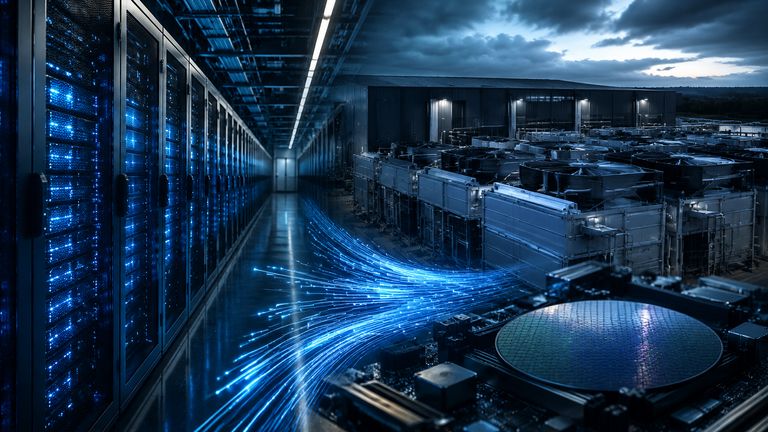
The company said its subsidiary TDC had appointed Norwegian contractor DCI to convert its existing facility in Tydal, Norway, into a 180 MW AI data center. The project is expected to be completed in December 2026 and will mainly run NVIDIA’s latest Vera Rubin AI platform.
But this is not a story about a cash-rich company spending freely.
Bitdeer’s total debt has now exceeded $1.3 billion.
On one side is a balance sheet nearing the red line; on the other is a top-tier European computing power infrastructure project that will burn through capital.
What, exactly, is behind such a starkly contradictory move?
A Fight for Survival With Gross Margin Down to Just 4.7%
The starting point for all of this is the sharp squeeze on Bitdeer’s legacy business.
In April 2024, Bitcoin underwent its fourth halving, cutting block rewards from 6.25 coins to 3.125 coins.
Revenue was cut in half almost overnight, while power bills and equipment depreciation did not fall by a cent.
In the fourth quarter of 2025, Bitdeer’s crypto mining gross margin fell to 4.7%. In other words, for every 100 yuan of revenue, less than 5 yuan remained after costs.
More troubling, fires were breaking out on other fronts as well.
Its third-quarter report on November 10, 2025 showed that its in-house A4 chip had been delayed significantly. The company posted a loss of $1.28 per share for the period, far wider than the expected loss of $0.22, and its shares fell 14.9% the next day.
Then, on the afternoon of November 11, a fire broke out at its mining farm under construction in Ohio, causing two buildings to collapse.
Adding to the pressure, starting in December 2025, several law firms filed class-action lawsuits accusing the company of making misleading statements between June 6, 2024 and November 10, 2025 about the technical maturity and mass-production timeline of the A4 chip.
Margins have been squeezed to the limit, and the core business keeps running into turbulence.
With cash flow already this tight, why make such a big push into Norway?
The Most Valuable Asset Is Not the Mining Rig, but Cheap Power
Because going to Norway is, in effect, a search for a way out. Bitdeer already had a 175 MW crypto mining facility in Tydal, Norway, and on March 30, 2026 it announced plans to convert it into a 180 MW AI data center. “AI server rooms fear heat most and consume the most electricity,” one industry source said.
“Industrial power prices in Norway are roughly $0.04 to $0.09 per kilowatt-hour, and the average annual temperature is about 5.8°C, which is basically a natural giant air conditioner,” the person said.
With that natural environment, its liquid cooling facility can reach a PUE of 1.1, meaning that for every 1 yuan spent on electricity, more than 0.9 yuan goes to actual computing work.
Local electricity also comes almost entirely from hydropower, and waste heat from the facility can be supplied to nearby food factories. That kind of “green” story plays well in capital markets: in February 2026, Bitdeer issued $325 million in convertible notes at a 5% interest rate.
With natural cooling and cheap power, converting suitable mining farms into AI server rooms has become an industry consensus.
But when it comes to exactly how to do it, Bitdeer has chosen an especially ambitious path.
$65 Million in Annual Interest, and the Heaviest Hands-On Bet
By 2026, peers across the industry were scrambling to reinvent themselves.
Most were either becoming asset-light landlords or tying themselves to tech giants for stability.
In June 2024, U.S.-listed miner Core Scientific signed a 12-year computing power contract worth more than $10 billion with a cloud services provider.
In December 2025, Canadian miner Hut 8 secured a Google-backed AI infrastructure agreement worth $7 billion.
By January 2026, Riot had sold 1,080 bitcoin to buy land in Texas, then signed a data center lease with AMD that could be worth $1 billion.
But Jihan Wu, shaped by his years at Bitmain, has kept his characteristic style: raising the money himself, building the facilities himself, and operating them himself. That approach can capture profits across the value chain, but it also means taking on huge heavy-asset risk alone.
As of February 2026, Bitdeer’s AI business was running 2,096 GPUs with utilization of about 64%, generating roughly $21 million in annual revenue at full run rate.
On the other side, however, more than $1.3 billion in debt produces annual interest expenses as high as $65 million.
Its current AI revenue is enough to cover only about four months of interest payments.
This heavy-asset blueprint has split Wall Street into two sharply opposed camps.
Nearly 40% Short Interest, and Everyone Is Waiting for One Signature
One group sees a severely undervalued computing power gold mine.
As of March 2026, among the 12 institutions covering the company, 10 rated it “buy,” with an average target price of $26.60.
Investment bank Benchmark, citing industry benchmarks, noted that new AI data centers typically cost $8 million to $12 million per MW to build, suggesting substantial revaluation potential for Bitdeer given its access to low-cost power.
But another group has voted against the company with real money.
KBW cut its rating in January 2026 with a $14 price target, while Zacks went further on March 19 with a “strong sell” rating.
The clearest number is this: as of March 27, short positions in Bitdeer accounted for 39.83% of its public float.
That means nearly two out of every five freely traded shares had been borrowed and sold short, with bears focused squarely on the uncertainty surrounding its aggressive expansion.
At this point, all the suspense and pressure ultimately come down to one piece of paper: a contract for the AI business.
On the February 2026 earnings call, analysts repeatedly asked the same core question: had the 180 MW in Norway actually been leased?
The chief financial officer’s answer at the time was that the company was in intensive negotiations with well-known industry players.
Its massive blueprint is already laid out, while the interest bill is generated on schedule every day.
What comes next depends on who moves into that 180 MW facility.





Comments
00No comments yet. Be the first to weigh in.