
Bitcoin circles have a new “lucky winner.”
According to a post on X by a developer of the CKPool mining pool, a miner connected through CKPool contributed only a tiny amount of computing power, yet still managed to mine a block.
For a miner of this scale, the odds of finding a block on any given day are just one in 100,000, or roughly once every 300 years.
The reward currently stands at 3.125 bitcoin plus transaction fees, worth about $210,000 at current prices.
A Miracle Appears
Start with a few numbers to understand just how improbable this “miracle” was: the solo miner had only 70 TH/s of computing power.
That may sound like a lot, but in today’s Bitcoin network, where capacity is measured in exahashes, it represents only about 0.000007% of the total.
It is like standing in a stadium packed with 100,000 people, everyone buying lottery tickets at the same time, while you hold just one, and somehow the jackpot lands on you.
Under normal odds, this miner would need to run that amount of computing power nonstop for 300 years to reliably find a block. Instead, after just a few days, he walked away with 3.125 bitcoin plus fees, worth about $210,000 in total.
A once-in-centuries Bitcoin lucky winner is enough to shake the industry. But failed mining bets, heavy losses and costly mistakes happen every day, and the market has largely grown used to them.
The Bitcoin bear market from 2022 to 2023 was a brutal testing ground for individual solo miners.
At the time, total network computing power was stuck at a high range of 200 to 350 EH/s. Retail miners holding just 1 to 100 TH/s were like soldiers walking into an artillery position with slingshots, with almost absurdly low odds of success.
Take a 50 TH/s mining rig as an example: its daily chance of mining bitcoin was only between one in ten million and one in 100,000.
Electricity costs, however, were very real. Dozens or even hundreds of yuan went out the door every day without so much as a sound. For 99% of individual solo miners who held on for six months to a year, finding a full block was out of reach, and many may not have seen even a small amount of transaction fees.
By the time they looked back at the numbers, tens of thousands or even hundreds of thousands of yuan in principal had largely been sunk into depreciating mining rigs and mounting electricity losses. They entered full of hope and left battered, with nothing to show for it.
Who Is Still Playing This Kind of “Suicidal” Mining Game?
Bitcoin mining is no longer the grassroots era of a decade ago, when people thought they could buy a few graphics cards, put them on a balcony and get rich.
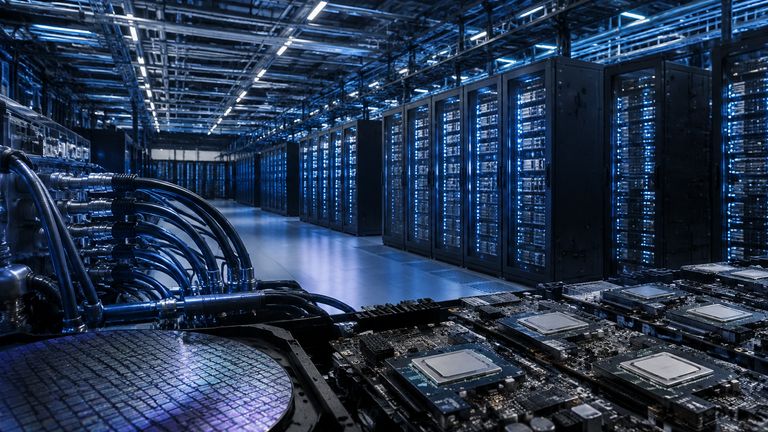
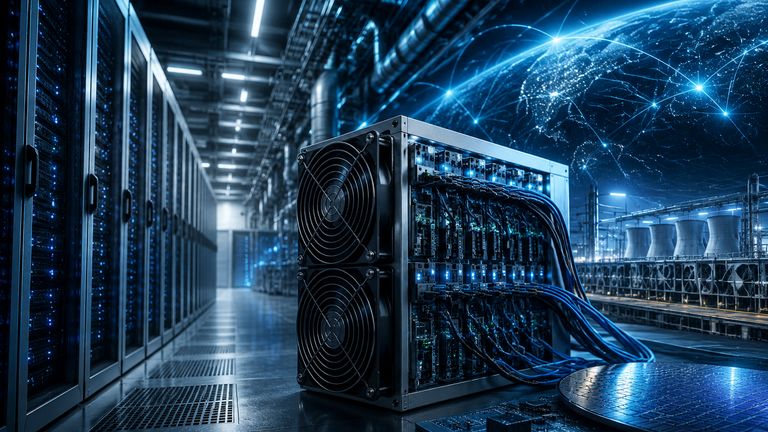
Today’s mining farms are industrial operations: thousands or tens of thousands of top-tier mining rigs lined up in vast facilities, backed by hydropower stations or nuclear plants, and monitored around the clock by professional operations teams.
To smooth out returns, most small miners join mining pools, combining their computing power and splitting rewards in proportion to contribution. The daily payout may be only “small change,” but it is steady.
This lucky miner chose an individual mining pool such as CKPool, which lets individuals independently try to find blocks while still using pooled infrastructure. Unlike a traditional mining pool, participants do not share rewards. That means if a miner successfully finds a block, the entire reward goes to the winning miner, but the probability of success is extremely low.
If you do not find a block, your electricity spending is gone, with no revenue at all.
But if your luck is off the charts and you do find one, that more than $200,000 is all yours, with no need to share it with anyone.
Is this really mining? It looks more like wagering real electricity bills on an almost impossibly small jackpot.
That is why such profits have become increasingly sporadic in recent years. As mining returns have tightened, with Bitcoin hashprice hovering around $30 per PH/s, most small mining pool operators have either shut down or joined larger pools to secure more stable income.
Do Not Be Blinded by Survivorship Bias
At this point, plenty of readers may already be tempted to buy a machine and try their luck.
Hold on. In finance, there is a term called “survivorship bias.” We are seeing this story because he succeeded. Behind him are thousands upon thousands of people who bought machines, paid electricity bills and ultimately saw nothing at all.
Today’s “hashprice” has fallen to alarming levels. For ordinary people, the barrier to mining is not the price of the machine, but the cost of electricity.
At a time when professional players, mining tycoons and leading companies are all locked in a race over efficiency and energy costs, an individual trying to profit through solo mining is essentially making a legal and extremely expensive gamble.
This event caused a stir not only because of the $210,000 payout, but also because it touched something close to Bitcoin’s original character: the randomness of decentralization.
When a miracle is called a miracle, it means it can no longer serve as a path for ordinary people.
This once-in-300-years lucky miner is more like a faint warm echo that Bitcoin, in its industrialized age, has left for retail dreamers.
It tells us miracles still exist, but it also gently reminds everyone: unless you have luck that defies the odds, it is best not to charge alone into a battlefield surrounded by giants.
After all, most of us will not live to see the next 300 years.




Comments
00No comments yet. Be the first to weigh in.