
Who would have thought that the Bitcoin faithful who once devoured power in Texas just to mine a string of characters would now be busy swapping mining rigs for GPUs at their mining farms?
In the past couple of days, a striking piece of news has circulated in the industry: Riot Platforms’ shares rose about 12% on Friday after the company announced a land acquisition and long-term lease agreement that will accelerate its push into artificial intelligence and high-performance computing data center development.
Riot Games said it spent $96 million to acquire 200 acres of land beneath its Rockdale site in Milam County, Texas, funding the purchase entirely with proceeds from the sale of about 1,080 bitcoins on its balance sheet.
It sounds like the tired story of a faded internet celebrity reinventing itself. But look a little closer, and the business logic and calculation run much deeper than they first appear.
This Is Not a Pivot. It Is Survival
Life in the crypto mining world has not been as easy as it was a few years ago.
The pressure of the halving cycle hangs overhead like the sword of Damocles. If electricity prices rise even slightly, miners have to shut down en masse.
The AI world next door could hardly look more different.
Giants such as OpenAI and Google are fighting ferociously for computing power, while the whole world is shouting about shortages of cards, power, centers and data centers.
The people at Riot are shrewd, and they know exactly what they hold.
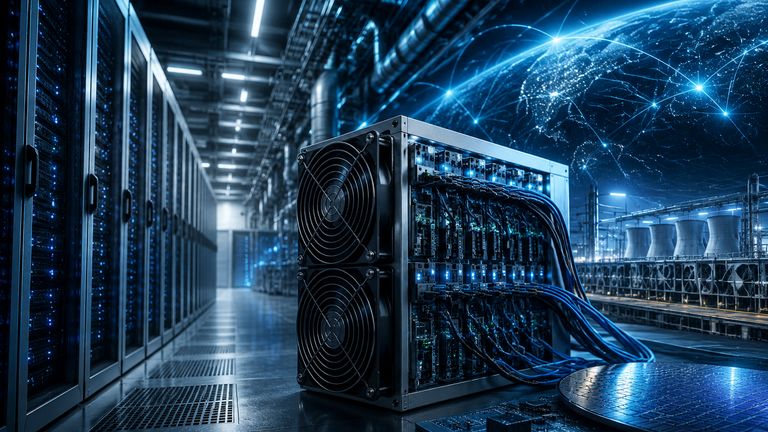
It is not the tens of thousands of mining rigs. It is extremely cheap power contracts in Texas and large tracts of land. In the AI era, those are hard currency.
So the partnership with AMD is, in plain terms, about taking electricity once used to “calculate random numbers” and redirecting it to “run logic” for AI models.
For Riot, this is hardly a pivot. It is a search for a higher premium on the assets it already owns.
AMD’s Advance
Then there is the other main player, AMD. In the AI computing power race, NVIDIA is the undisputed incumbent: dominant, aggressive and firmly in control.
AMD has been chasing for years, but it has always seemed just short of the mark.
The logic behind AMD’s tie-up with Riot is straightforward: if high-end computing power centers are monopolized by NVIDIA, then AMD can break in through infrastructure and vertical use cases.
AMD needs a proving ground capable of supporting large-scale computing power deployments, and Riot’s infrastructure capabilities in Texas fill that gap neatly.
The complementary strengths of these two challengers have the feel of a precise flank move aimed at breaking through together.
Why Texas?
Many people do not understand why such high-end AI computing power centers would favor Texas.
That comes down to Texas’s strange but brilliant power system. Electricity in the state is highly market-driven, giving large customers such as Riot significant bargaining power.
Even more importantly, they are skilled at “power arbitrage”: when electricity prices are high, they shut down and sell power back to the grid; when prices are low, they run computing power flat out.
Now that load-adjustment strategy is being applied to AI. Imagine a complex that can flexibly tune computing power loads to electricity prices while balancing crypto mining cash flow and AI training.
That kind of commercial flexibility is enough to make conventional IDC server rooms envious.
The Endgame of Computing Power
In truth, it is the monetization of electricity. After watching Riot and AMD make this move, my strongest takeaway is not simply that AI is hot, but that humanity’s hunger for computing power has evolved into a new phase of “energy extraction.”
In the past, we thought of AI as code, large models and top-tier algorithms.
But now it appears that the underlying logic of AI competition is primitive and brutal: who can secure more electricity, and who can convert that electricity into computing power more efficiently.
Riot’s “defection” marks the end of an era: the age of nouveau riche miners betting solely on coin prices to turn their fortunes is over.
The future computing power giants will be heavy-asset players that understand chip fundamentals, power dispatch and how to build massive server halls in the desert.
Everyone is talking about how many jobs AI will destroy, but few are noticing that the “miners” once looked down on by mainstream finance are quietly completing a polished transformation into the infrastructure fanatics of the AI era.
The deepest irony is this: Bitcoin mining farms once dismissed as virtual, bubbly and unproductive have ultimately become one of the firmest physical foundations supporting humanity’s move toward artificial general intelligence, or AGI.
Did AI save the miners, or did mining farms feed AI? The answer may be hidden in the endless whir of cooling fans across Texas.
Comments
00No comments yet. Be the first to weigh in.