
If you stretch your view far enough and look back over the past 30 years of technology history, you may notice something unsettling: almost every industry that delivered 100x or 1,000x excess returns, from the internet and big data to digital currencies, new energy, chips and computing power, seems to have been moving in the same direction.
They all seem to be helping “silicon-based life” come into being.
In this 30-year “god-making project,” all those 1,000x returns may have been no more than a small reward for the people who helped silicon-based life evolve.
Silicon-Based Arrival
What Is Silicon-Based Life?
The core of the human body is the carbon atom. We are the ultimate form of carbon-based life.
By contrast, silicon-based life is built around the silicon atom. It is “assembled” from chips, steel, wires and similar materials, and AI is its embryonic form. The arrival of silicon-based life has become an irreversible trend.
Look back over the past 30 years, and the industries that made serious money and captured excess returns all seem to have been doing the same thing: helping silicon-based life arrive.
Start with the internet industry. In effect, it helped build the “neural network” for silicon-based life.
In the past, computers on Earth were isolated “islands.”
The internet connected those isolated islands into a single network through fiber optics and protocols.
That wave generated a 10x to 300x era dividend. Giants we see today, including Alibaba, Tencent, Baidu, Amazon and Google, completed their first leap in status during that cycle.
The second wave was big data and cloud computing, which surged after the internet.
Big data supplied the most basic nourishment for silicon-based life. In a sense, it can even be called the “DNA” of silicon-based life.
There were simply too many companies that made money in the big data wave.
Today, almost every major tech company has participated in the big data industry. Cloud computing, meanwhile, gave silicon-based life “super brain capacity.”
We saw Alibaba Cloud, Huawei Cloud, Tencent Cloud and Sugon rise together. This cycle created a 5x to 60x system-level expansion of wealth.
The third wave was blockchain and digital currencies.
They established a “value settlement system” for silicon-based life.
In the future, value exchange among silicon-based life forms is unlikely to happen through fiat currencies. More likely, it will be settled through smart contracts and digital currencies.
This system is almost tailor-made for AI. Think about it: in the future, AI systems will conduct massive data exchanges, rent computing power and issue tasks to one another. Their settlement will have to be small-value, high-frequency and automated.
They only need to write the rules into smart contracts. Once an AI completes a task, digital currency settles automatically.
In that cycle, Bitcoin, Ethereum and major exchanges rose. On the asset side, it produced 100x, 1,000x and even 10,000x-level returns.
The fourth wave was new energy and energy storage, which became extremely hot over the past two years.
This is the “power system” of silicon-based life. Without electricity, all intelligence is empty talk.
Electricity matters to silicon-based life the way food matters to humans.
And the smarter silicon-based life becomes, the bigger its appetite.
NVIDIA’s Jensen Huang once said: “The endgame of AI is solar power and energy storage.”
Why? Because if the energy problem is not solved, the Earth’s power grid may burn out before the silicon-based brain finishes evolving.
As the arrival of silicon-based life accelerates, the energy war is only just beginning, and this industry is still full of opportunity.
In this cycle, BYD and CATL captured an era premium of 20x to 50x.
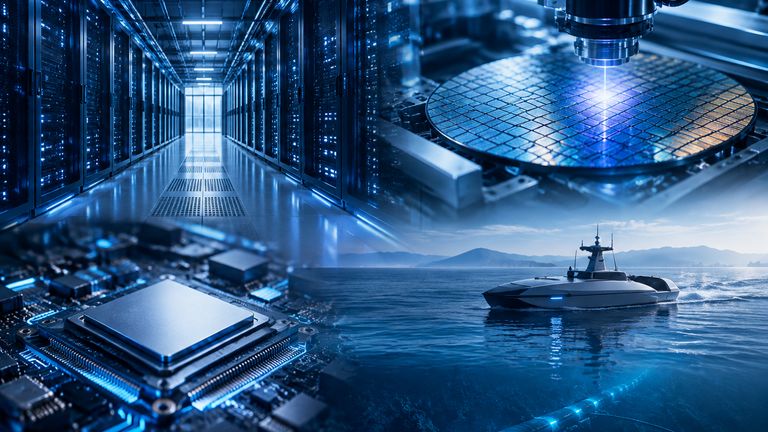
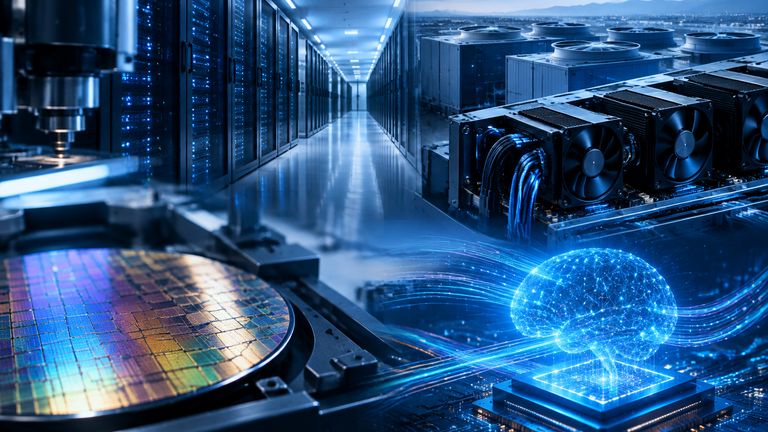
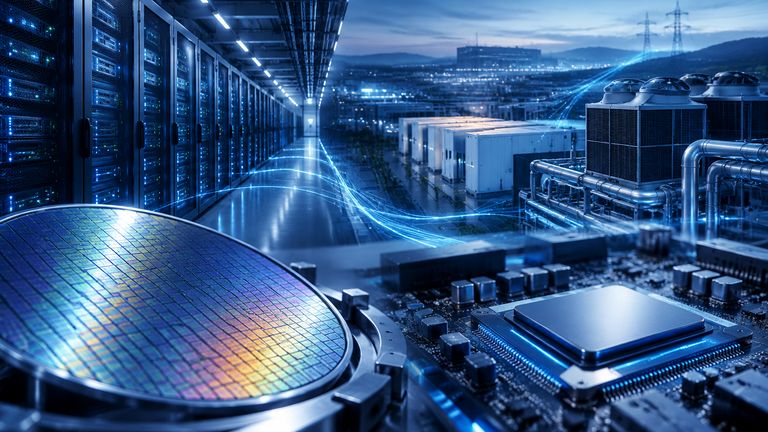
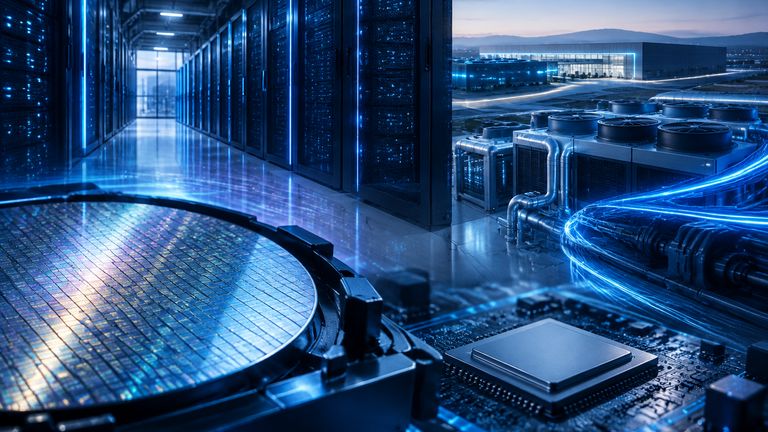
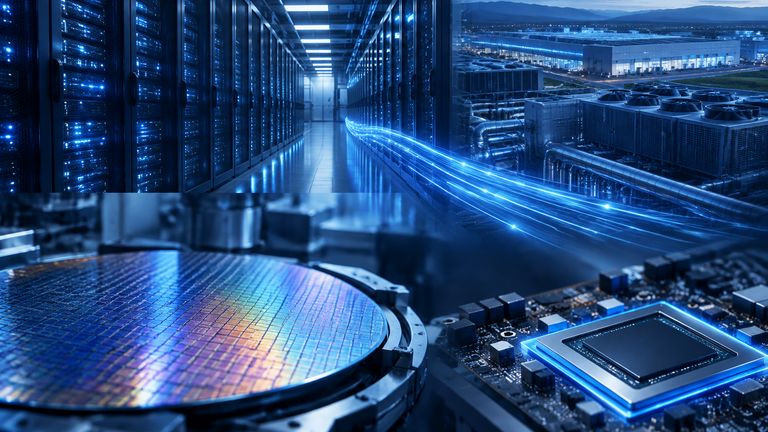
The fifth wave is today’s hottest arena: chips and computing power. They provide the brain of silicon-based life with higher-level intelligence, enabling silicon-based life to “move up another dimension.”
They digest data and produce intelligence. The more advanced the chips and the greater the computing power, the faster its “brain” runs.
Today’s hottest names, NVIDIA and TSMC, have both gone through supercycles of 10x to 200x.
Look carefully back at the past 30 years. Their development paths are so clear that they seem to have been heading toward a single destination.
Following this clear path, we can work backward to one question: where will excess returns appear over the next decade?
Embodied AI
At present, the “brain” of silicon-based life has basically taken shape. It lacks only one final thing: a body that can enter the real world.
Today’s AI is like a “baby” with extremely powerful thinking abilities, but it is still wrapped in swaddling clothes. That swaddling cloth is the screen.
It is trapped inside the screen. Most of its data is fed to it by humans. It can think, but it cannot truly be said to be “alive.”
It does not understand weight, friction or danger, and it understands even less what causality is.
Next, it needs to step out of the screen and enter the real world, collecting data on its own, drawing conclusions and even working to support itself.
Humans, too, will push it aggressively into the real world.
The reason is simple: humans need it to serve us.
Whether it will continue serving humans after entering the real world is a separate question.
In a speech at COMPUTEX, Jensen Huang said: “The next wave of AI is physical AI.” Fei-Fei Li, often called the godmother of AI, also said this year: “Spatial intelligence is the next frontier of AI. It is not enough for today’s AI to chat. It must evolve spatial intelligence to understand the real world.”
Tesla founder Elon Musk may be the most aggressive robot builder on Earth.
He believes that by 2040, the number of humanoid robots will exceed the number of humans, reaching 10 billion units or more.
Almost every major figure in AI is pointing in the same direction.
That direction is the concept that has been hot recently: embodied AI.
Many people think embodied AI simply means “robots.” That is not entirely correct. The English term is Embodied AI, and its real meaning is to give any intelligent system a physical body so it can enter the real world.
So any interface connected to today’s large AI models can be considered part of embodied AI.
Popular products such as AI glasses, AI rings and even AI toys all fall within the scope of embodied AI.
The common view in the industry is that over the next decade, whoever controls embodied AI will control three of the most important resources at the same time: productivity, real-world data and combat capability.
Each of those three words carries enormous weight. Some experts have long advocated “anti-AI” rhetoric, trying to slow AI’s entry into the real world.
But can it stop? No.
Because this is no longer just a business issue. It is a contest among states, capital and sovereignty.
If one country stops while its rivals do not, it will lose all say in the future. This is a classic prisoner’s dilemma. So aside from running flat out, we have no choice.
This will certainly not be a world controlled only by big tech companies. Many small but excellent products may emerge, targeting highly specific tracks and niches to solve a particular pain point or need.
For ordinary people or small teams, this is a once-in-a-generation opening.
As Zhang Yong, former chairman and CEO of Alibaba Group, put it: “In the future, every industry, every application, every piece of software and every service deserves to be rebuilt on new artificial intelligence models.”
Kevin Kelly, author of Out of Control, wrote repeatedly in his new book The Inevitable: “The business plans of the next 10,000 startups are easy to forecast: Take X and add AI.”
Now the brains have been trained by the big companies, and many have already been open-sourced. As for supply chains, China lacks nothing in supply chains.
The current situation is this: everything is ready. It only needs to land. In one sentence: over the past 30 years, every technology dividend has merely been building organs for “silicon-based life.”
Now its brain has formed, energy is in place and computing power has been deployed. Only one final step remains: give it a body.
What it changes is not one industry, but the entire mode of production, social structure and flow of wealth.
This is not a simple technology upgrade, either. It is a civilization-level leap.
If you missed the internet, digital currencies and NVIDIA, then this time history has once again pushed open a window to a vast opportunity: embodied AI. The second half of the China-U.S. contest will not play out at the negotiating table, but on the production lines of silicon-based life.
Comments
00No comments yet. Be the first to weigh in.