
On February 9, 2026, shares of Delin Holdings rose more than 4% to HK$1.78.
That would not count for much in most stocks. For Delin Holdings investors, it was the first good news in a long while.
Since its 52-week high, the stock has slid unevenly from HK$5.78 to HK$1.78, a drop of 69%.
A few nights earlier, the company issued an announcement: bitcoin output reached 51.937 coins in January 2026, up 106% month on month, with full-year production expected at 600 to 700 coins.
It was Delin Holdings’ fifth month in the bitcoin crypto mining business.
From announcing its move into mining in September 2025, to completing deployment of 9,148 mining rigs by year-end, to now producing more than 50 bitcoins a month, this traditional Hong Kong family office completed a high-wire transformation in a single year.
The question is whether the transformation is worth it.
The Timeline Behind 9,000 Mining Rigs
Delin Holdings’ makeover is one of the smoothest pieces of capital-market theater Hong Kong stocks have seen in recent years.
Until the summer of 2025, it was a typical old-school family office, running the dull businesses of wealth management and securities brokerage, with no connection to bitcoin.
But by today, February 9, 2026, the stock had already been labeled “the first computing power stock in Hong Kong equities.”
Reviewing the past six months, every step Delin took landed precisely in the gaps between capital and technology.
Delin’s mining rollout can be divided into three stages.
Stage one: building momentum, from June to July 2025. That summer, Delin suddenly stopped pretending.
On June 24, it first signed a strategic cooperation letter of intent with ViaBTC, the world’s third-largest mining pool, planning to set up a joint venture for cryptocurrency OTC trading.
On July 9, it dropped a bombshell: it would turn its own building into an RWA, or tokenized asset. The stock surged 70% that day, at one point touching HK$5.75.
“This is a very typical Hong Kong stock-market play,” fund manager Li joked privately. “RWA with the left hand to tell a story, mining with the right hand to ride the hype. Retail investors love this.” Over the next three months, Delin Holdings pushed procurement and deployment at remarkable speed.
Stage two: harvesting attention and buying equipment, from September to October 2025. With the market heated up, Delin had to make the story real, and more importantly, get the money in hand.
On September 15, Delin signed a term sheet with Fortune Peak to begin acquiring mining rigs, paying about $21.85 million for 2,200 S21XP HYD bitcoin mining rigs.
On September 28, Delin signed a letter of intent with Bitmain to acquire 2,995 mining rigs, planned for deployment in Oman and Paraguay. One analyst put it this way: “The day it moved from concept speculation to real procurement with hard cash was the dividing line.” But the real main event was financing.
On October 21, the company abruptly announced a discounted share placement, raising HK$973 million.
Some 56% of the money went to crypto mining, using a “top-up placement” structure: major shareholders first sold old shares for cash, then subscribed for new shares, leaving their stake unchanged while the money came in.
The stock opened nearly 9% lower that day and had halved from its July high.
The familiar “pump, place shares, crash” pattern left many veteran retail investors wondering: was this a transformation, or a setup?
Stage three: production, from November 2025 to the present. On November 12, all 1,900 mining rigs at the Oman mining farm were installed.
On December 12, 4,000 mining rigs began operating in Oklahoma in the United States.
On December 14, Delin acquired another 4,000 mining rigs from three suppliers for a total consideration of $39.2 million.
On December 29, Delin Securities received approval from the Hong Kong Securities and Futures Commission to upgrade its virtual-asset trading license.
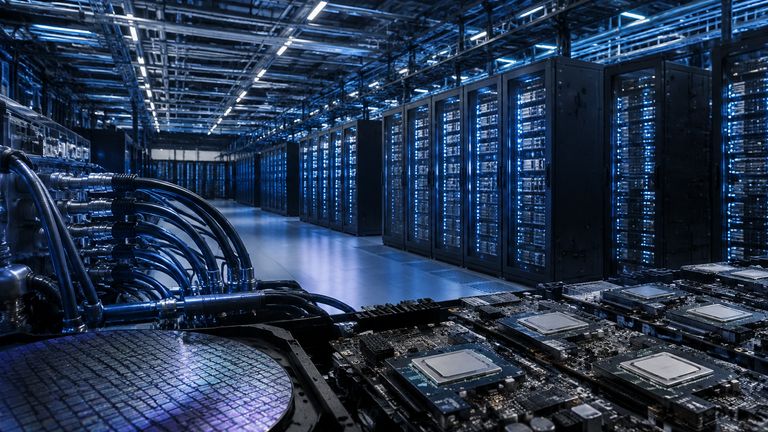
On December 30, the company said it had completed the acquisition of 9,148 mining rigs, with total hash rate of about 3.993 EH/s, deployed across the United States, Oman and Paraguay.
From signing a letter of intent in June to full production in December, Delin took less than half a year.
The cost was two share placements that raised more than HK$1.5 billion in total, while the stock fell from a high of HK$5.75 to HK$1.79 in February 2026, a 69% decline. As of the end of January 2026, Delin held 84.555 bitcoins, all generated from crypto mining.
The scale is not large, but for a newcomer, the pace is undeniably fast.
Why Now? Why Crypto Mining?
Delin Holdings’ original business was family office services and investment banking.
The group was founded in 2010 and listed through a backdoor listing in 2020. Its main businesses were managing money for wealthy clients, providing financial advisory services and running securities brokerage.
As of September 2025, its family office segment managed more than $2 billion, giving it meaningful scale among Hong Kong family offices.
But starting in 2024, life became harder.
In fiscal 2025, ended March 2025, Delin’s total revenue fell 6.3% year on year to HK$190 million, while revenue from its core financial services business was nearly cut in half, plunging 28%.
In plain terms, wealthy clients had tightened their wallets and were reluctant to move.
Wang, who runs a Hong Kong family office, told us Delin’s predicament was not unique: “Old-line banks such as HSBC and Standard Chartered are all competing for ultra-high-net-worth clients. Independent family offices of Delin’s size are stuck in the middle, and it is uncomfortable.”
With its core business under pressure, Delin had to find a new way out. Bitcoin mining became that route.
But this was not just about a shortage of money. It was also because the company smelled a back door left open by policy.
2025 was a watershed year, as the Hong Kong SFC introduced tiered regulation for virtual assets.
Previously, anyone who wanted to touch crypto had to fight for a VASP license, which was notoriously hard to obtain. Now, as long as a firm already held a traditional Type 1 securities license, it could use an “upgrade channel.”
Delin moved quickly and secured that entry ticket on December 29, 2025. It did not need to apply from scratch; by adding conditions to its existing license, it could legitimately buy and sell virtual assets for clients.
This was classic regulatory arbitrage: use an old license to do a new business. The compliance costs and time saved become profit.
But crypto mining is only the first step. The company’s internal plan is a “three-stage digital finance strategy,” which reveals its ambition: mining is merely the bottom-layer “money printer.” What Delin really wants is the financial game above it. First mine bitcoin, then use that asset base for OTC trading, and finally package those assets into RWA, or real-world asset tokenization, products to sell to funds.
Delin does not want to be a miner. It wants to create assets, trade them, and issue products itself in the crypto world.
Crypto mining is merely the infrastructure bill it has to pay to close the loop.
What Did Delin Get Right?
To be fair, Delin made several sharp moves over the past year.
First, it secured the timing “entry ticket.” A lawyer told me: “2025 was a loose year for the upgrade channel. It may tighten in the future.”
Delin obtained its license right at that point, effectively grabbing a compliance ticket. The value of that license goes far beyond “being able to trade bitcoin.”
If the tokenization project for Delin Tower eventually lands, a licensed broker will be a critical distribution node.
According to company announcements, Delin Securities has been appointed as the proposed distributor for the Delin Tower LPF tokenization project.
In other words, the license is laying track for the RWA business that comes later.
Second, it found the right “power-leveling” partner. Bitmain provides fully managed operations and maintenance, so Delin does not need to build its own operations team. Once the mining rigs arrive, they can start running.
The hosting fee is no more than $0.08 per kilowatt-hour. A mining farm owner privately described it as “standard pricing, neither a rip-off nor a bargain.”
At the same time, connecting to ViaBTC, the world’s third-largest mining pool, effectively creates a closed loop from mining to OTC monetization.
This hands-off model allowed Delin to avoid the heaviest operating burden.
Finally, there was the frenzied acceleration in computing power. In just two months, computing power surged from 0.84 EH/s to 4.03 EH/s, nearly a fivefold increase.
At the current bitcoin price of about $70,000, if Delin can indeed mine 600 to 700 bitcoins as it forecasts, annual output value would approach $42 million.
But there is a hidden breakeven line here.
After accounting for $25 million to $30 million in electricity costs plus mining-rig depreciation, Delin’s cost to mine one bitcoin is roughly between $60,000 and $70,000. As long as bitcoin does not fall below that line, the mining business makes money.
But on February 9, 2026, bitcoin was actually trading around $70,000, leaving almost no margin of safety.
Where Are the Problems?
Delin also left plenty of question marks over the past year.
The first and most painful question for existing shareholders is the frequent share placements. In August 2025, Delin raised about HK$600 million through a placement, and the stock fell 9% in a single day. Two months later, it placed shares again at an 11.34% discount, raising HK$973 million, and the stock plunged another 15.41%.
In the five years since listing, Delin has raised more than HK$3.4 billion through placements, far above its original listing cost of HK$196 million.
The public float has been diluted from more than 70% to 37.63%.
One investor complained: “Good-news announcement, share placement, stock price cut in half, another promise, another placement. When does this cycle end?”
The second question is the RWA project.
According to Delin’s statement last year, it planned to turn Delin Tower, valued at 500 million yuan, “into tokens,” with launch originally scheduled for early 2026.
It is already February 9, and the regulatory green light still has not arrived. The project remains stuck inside the black box of user review.
That is not surprising. An industry insider said: “The compliance difficulty is far beyond what companies expect. How do you confirm title to the underlying asset? How do you set the threshold for retail investors? This is not something you solve by writing a line of code. Many RWA projects die in the last mile of compliance.”
The third question is Delin’s heavy dependence on bitcoin prices.
Delin’s lifeline is still tightly tied to bitcoin’s price curve. Its shutdown price is around $70,000.
With bitcoin hovering around $70,000, the profit margin on each coin mined is already very limited.
If bitcoin falls below the cost line, the mining business will immediately lose money.
Do not forget that just two months ago, bitcoin briefly broke below the $65,000 cost line.
An analyst told us Delin’s model is a classic “high-beta business”: when bitcoin rises, returns are amplified; when bitcoin falls, losses are amplified too.
This is a leveraged bet. If the 2026 expansion plan is actually implemented, computing power will double, but heavy-asset depreciation will push the cost line even higher.
If bitcoin pulls back to $50,000, this will no longer be a money printer but a shredder: on one side, an RWA story that still cannot be monetized; on the other, a crypto mining gamble dependent on market conditions; and in the middle, endless demands on shareholders.
Delin today is holding chips that do not really belong to it, betting on an uncertain future.
Delin Holdings’ situation may reflect the shared anxiety of some traditional financial institutions in Hong Kong.
On one side is a traditional family office business that keeps shrinking. On the other is cryptocurrency, with all its violent volatility.
The company’s transformation looks less like an active offensive than being forced to the table.
If it does not place a bet, it watches business continue to drain away. If it does, it must absorb the depreciation pressure of heavy assets and the uncertainty of bitcoin prices. These more than 9,000 mining rigs produce not only bitcoin every day, but also hefty electricity bills, equipment depreciation and management’s wager.
For onlookers, this is an experiment in an “elephant turning around.”
For investors inside the game, it feels more like waiting for an answer: can bitcoin rise faster than heavy assets depreciate? Delin in 2026 may have only two outcomes: either it rides the bitcoin cycle to excess returns, or it is dragged down by heavy costs when bitcoin pulls back.
For now, it is still impossible to see which outcome is more likely.
The train of the times roars past. It never asks whether you bought a ticket. It only asks whether you dare to jump on.
Comments
00No comments yet. Be the first to weigh in.