
No one expected Cipher, a veteran crypto mining company, to make a move that industry insiders immediately read as seasoned and shrewd during a lull in Bitcoin’s price volatility. Yesterday, Cipher announced it had acquired a project in Ohio called “Ulysses”: 195 acres of land and 200 MW of power capacity. On paper, it does not look earth-shaking. But anyone who knows the business can see the point: this is not a simple expansion. It is a long-planned migration.
For the past decade, Texas has been the Jerusalem of crypto miners. But the wind has shifted. Has Texas’s honeymoon ended? Once, ERCOT, the Texas power market, was the mining industry’s benefactor. Electricity was cheap, regulation was loose, and as long as miners behaved, shutting down during grid stress and “selling power” back into the system, the government could even pay them subsidies. Now Texas is overcrowded. With large amounts of computing power pouring in, the Texas grid has become like a subway at rush hour, with hardly any room left to squeeze in.
Worse, computing power no longer belongs only to Bitcoin. It also belongs to AI giants willing to spend heavily. Everyone is reaching into the same pot, eroding the electricity-price advantage, while queues for grid interconnection have stretched years into the future. Cipher’s move into Ohio is really a bet on the PJM market. PJM is the largest wholesale power market in the United States, covering more than a dozen states in the Northeast.
Compared with Texas’s isolation and congestion, Ohio’s access to PJM is like moving from a noisy street market into a well-run central business district. What Cipher acquired this time is not just land, but an extremely scarce “entry ticket”: all agreements needed to connect to PJM have already been secured. In an era when whoever controls power controls the field, the ability to bypass cumbersome approvals and access electricity directly is worth real money.
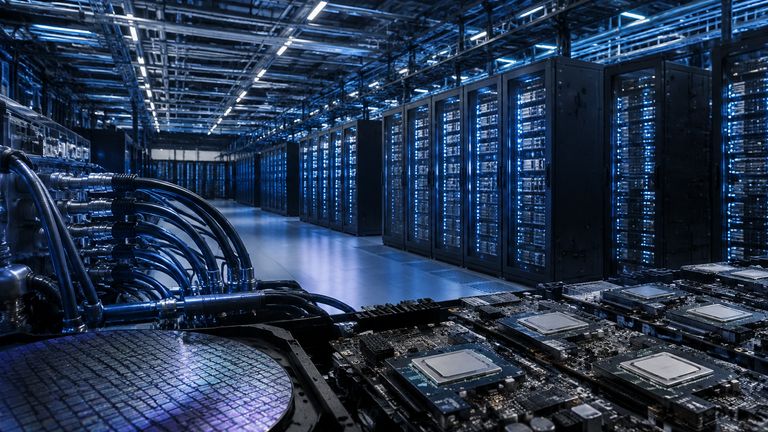
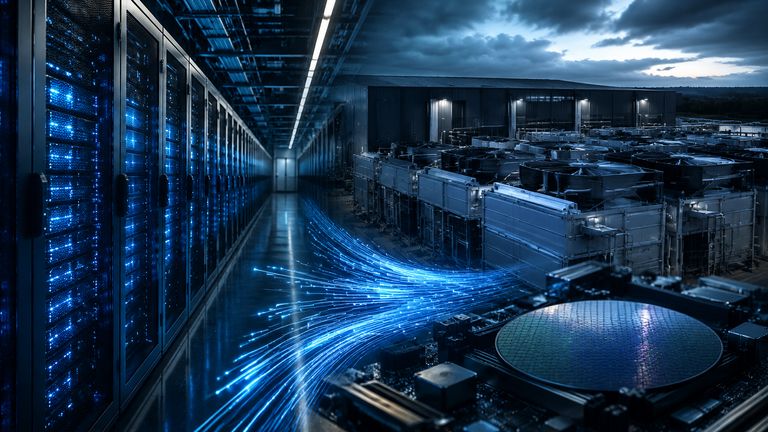
Second, look closely at Cipher’s announcement and an interesting choice of words stands out. The company no longer emphasizes only the deployment of Bitcoin mining rigs. Instead, it repeatedly mentions one term: HPC, or high-performance computing. In plain English, it wants to turn mining farms into data centers and lease them to AI giants. The current market is that Bitcoin mining “hashprice” has been hovering around the break-even line, making it hard-earned money in the most literal sense;
Meanwhile, in the AI compute leasing market next door, cloud providers known as hyperscalers, such as Amazon and Google, are carrying checkbooks and looking everywhere for sites with power. Cipher’s Ohio site has not only ample electricity, but also proximity to major cities and abundant fiber routes. Is this really a mining farm? It looks far more like an office building designed to meet the standards of a top-tier AI lab.
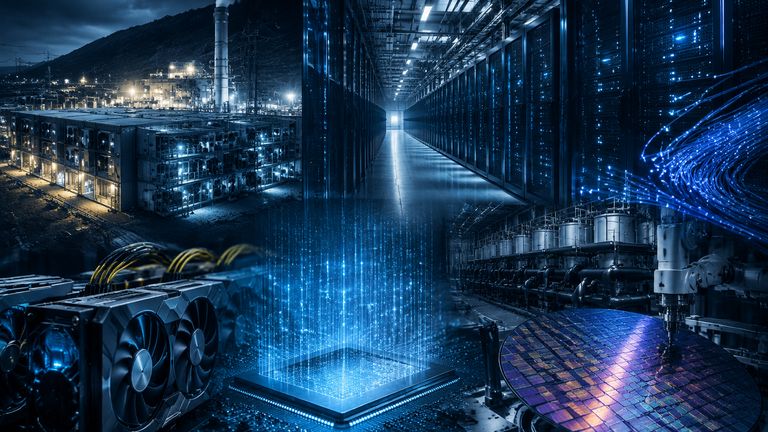
That is the survival rule of the moment: hold a low-cost power entry ticket in one hand, and wait for the best bid with the other. If Bitcoin performs well, Cipher can mine for itself. If AI rents are high, it can pull out the equipment and sell the power supply to arrays of NVIDIA GPUs. This two-way strategy means Cipher is no longer seen by capital markets as merely a “coal digger,” but as a high-tech landlord with an energy moat.
Third, Cipher’s move has pulled away a veil covering the entire industry’s discomfort. Smaller and midsize miners still clinging to Texas, hoping to get by on cheap electricity, are seeing their room to survive squeezed to the limit. The future competition in computing power has already shifted from a simple contest of hash rate into a game of capital and resources. Either you have the money to build a national footprint like Cipher and seize an early position in core power markets such as PJM;
or you have the leverage to sign decade-long power supply agreements with utilities. This playbook has essentially moved away from blockchain’s “distributed” idealism and increasingly resembles a traditional, asset-heavy infrastructure business. In this age of digital explosion, people are always talking about models, algorithms and consensus. But Cipher’s cross-state power grab tells us the simplest truth: behind all the prosperity of the virtual world, the cable plugged into the ground is the lifeline that decides who survives.
When computing power becomes the oil of this era, electricity is the only currency. Cipher’s trip to Ohio is not about finding greener energy, but about securing more stable “privilege.” In this age of computing power exploration, whoever first occupies the ports with power moats will be the one qualified to stay at the table for the next decade. Whether the site is used for crypto mining or running large models no longer matters much.
What matters is that as long as the lights stay on, the money keeps flowing.



Comments
00No comments yet. Be the first to weigh in.